Installing Efficient and Cost-Effective Compressed Air Systems in Factories
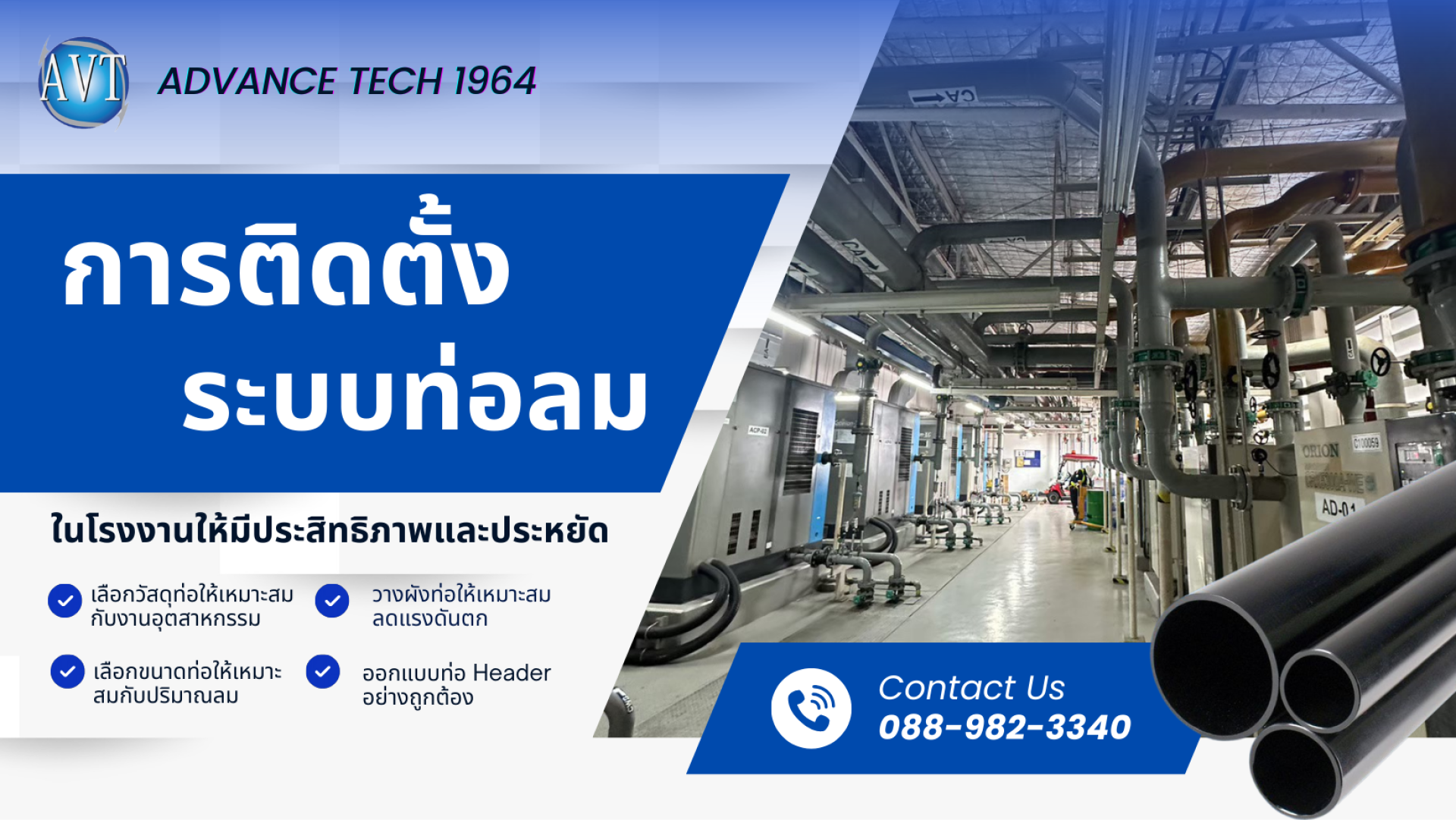
Efficient and Energy-Saving Compressed Air Piping Installation in Factories
The Compressed Air Piping System is a vital component of industrial manufacturing, as it transports pressurized air from compressors to various machines and equipment throughout the production line. A properly designed and installed system ensures stable operations, allows machinery to perform at peak efficiency, and significantly reduces long-term energy loss.
Conversely, poorly planned installations can lead to issues such as pressure drops, moisture accumulation, and potential damage to downstream equipment. These problems directly impact production efficiency and increase overall operational costs.
Therefore, before beginning installation, it is essential to conduct a comprehensive assessment of all related factors—especially the choice of piping materials. Each material offers distinct advantages: steel pipes provide high strength but are prone to rust over time; stainless steel offers excellent durability and corrosion resistance; while aluminum and modular compressed air piping are lightweight, easy to install, and minimize internal friction. The selection should be based on air pressure requirements, temperature, humidity, service life, and budget to ensure the most suitable and cost-effective system.
Key components for designing an efficient compressed air system include:
1. Pipe Sizing (Choosing the correct diameter to minimize friction and pressure loss)
2. System Layout and Configuration (Planning the distribution network, such as Ring Mains or Dead-end systems)
3. Header Design (Optimizing the main header to balance flow and pressure across the entire system)
1. Pipe Sizing
Selecting the appropriate pipe size to match the air compressor is the cornerstone of industrial compressed air system design. If the piping diameter is too small, it causes a significant pressure drop within the system. This forces the air compressor to work harder to compensate for the lost pressure, leading not only to excessive energy consumption but also to inefficient air delivery to the machinery.
Furthermore, excessive air velocity within the pipes can create pressure turbulence at valves and fittings. This turbulence results in inaccurate pressure readings and accelerates wear and tear on system components. For example, if using a 25 HP air compressor that delivers approximately 100 CFM at 100 PSI, increasing the pipe size from 1 inch to 1.5 inches can significantly reduce pressure drop. This optimization prevents the compressor from overworking and can result in energy savings of approximately 1–1.5% over the long term.
Additionally, choosing the correct pipe size helps minimize the reliance on excessive elbows, connectors, and potential leak points. This reduces overall compressed air leakage and lowers the maintenance costs of the factory's compressed air system.
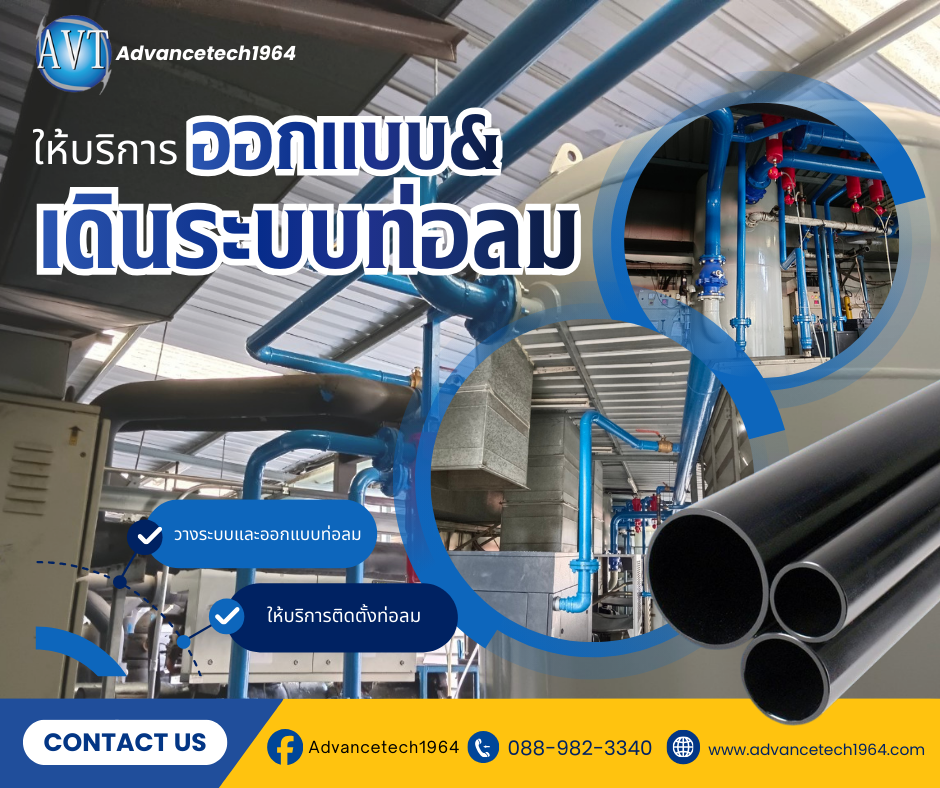
2. Piping Layout and Configuration
The design of the compressed air piping layout is a critical factor affecting overall system efficiency. A Single Line (or dead-end) layout, where air is distributed from a single main pipe to multiple points of use, often results in uneven pressure. Locations furthest from the compressor typically receive the least air pressure, causing machinery at the end of the line to underperform.
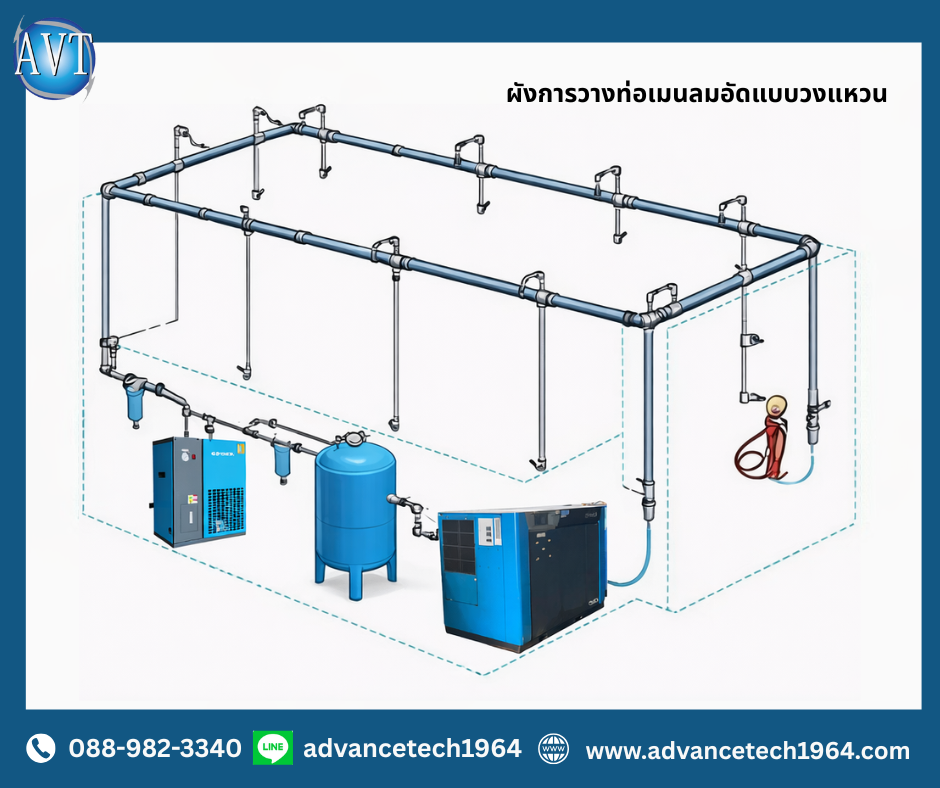
The recommended approach is to design a Ring Main System. In this configuration, the piping forms a continuous loop around the production area, allowing compressed air to flow from multiple directions. This ensures consistent air pressure throughout the factory, minimizes pressure drops, and reduces the workload on the air compressor. Furthermore, a Ring Main System is ideal for future production expansions, as new connection points can be easily integrated while maintaining stable pressure across the entire network.
3. Header Pipe Installation
The Header serves as the primary artery for distributing air to various sections of the factory. The sizing and placement of the header must be proportional to the total air flow rate.
A common pitfall to avoid is using a Bottom Drop Tee (connecting branch lines directly from the bottom of the header), as this allows dirt and condensate to settle at the connection point and flow into the machinery. Instead, an Overhead Drop (often called a "Gooseneck" or "Swan Neck" connection) should be used. By pulling air from the top of the header, you significantly reduce the risk of moisture and contaminants entering the system, thereby protecting your equipment.
A compressed air piping system is a fundamental infrastructure that plays a vital role in industrial production efficiency. Designing and installing a system based on sound engineering principles not only ensures stable air delivery but also minimizes pressure loss, reduces moisture accumulation, and extends the service life of machinery.
The core strategies for an optimized design include selecting the correct pipe sizing, implementing a balanced piping layout for even pressure distribution, and properly designing headers to prevent system contamination. By prioritizing these details during the planning phase, manufacturers can enhance production reliability, ensure operational continuity, reduce energy costs, and achieve long-term peak performance for their compressed air systems.
Contact Information
Advance Tech 1964 Co., Ltd. Your Comprehensive Compressed Air System Expert. We provide end-to-end solutions: Sales, System Design, Installation, and Energy Efficiency Audits for industrial plants.
Tel: 088-982-3340, 02-548-3115
Line: @advancetech1964
Website: www.advancetech1964.com