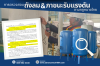
Annual Air Receiver Tank Inspection: What Needs to Be Done? Check Factory Air Tank Safety and Inspection Reports

Annual Air Receiver Tank Inspection: What Needs to Be Done? Check Factory Air Tank Safety and Inspection Reports
Advance Tech 1964 Co., Ltd. provides air receiver tank inspection services for industrial plants, along with wall thickness testing (Thickness Test) and inspection report preparation to support clients in maintaining compressed air system safety.
What Does an Annual Air Receiver Tank Inspection Include?
An air receiver tank inspection should consider the tank's condition, safety devices, and measurement results appropriate for the tank type, working pressure, service life, and relevant regulations. Key inspection items include:
- External Inspection of the Air Receiver Tank This involves checking the overall surrounding condition of the air receiver tank for any abnormalities, such as:
- Surface rust or corrosion.
- Dents, cracks, or signs of damage.
- Leaks around joints, flanges, or connection points.
- Stability of the support base and anchor points.
- Signs of seepage or operational damage.
- External inspections help identify initial abnormalities and determine whether further detailed inspections are required in specific areas.
Internal Inspection of the Air Receiver Tank Moisture, water, and contaminants from the compressed air generation process can accumulate inside the air receiver tank, leading to rust and corrosion, especially at the bottom and areas with standing water. Items to check include:
- Internal rust and corrosion stains.
- Accumulated sediment or moisture.
- Metal surface conditions in areas prone to corrosion.
- Abnormalities that may affect the structural strength of the tank.
Note: Internal inspections must be performed by qualified personnel following safety procedures, which require isolating the tank from the system and completely venting the pressure before opening.
Tank Wall Thickness Testing (Thickness Test) Thickness Test measures the wall thickness of the air receiver tank using appropriate tools, such as an ultrasonic metal thickness gauge, to assess the condition of the tank wall and detect areas of metal loss due to corrosion. The benefits of thickness testing include:
- Assessing the remaining wall thickness.
- Detecting areas with potential corrosion or thin walls.
- Supporting the assessment of tank safety conditions.
- Serving as data for maintenance planning or continued usage evaluation.
- Comparing results across inspection cycles (if historical data is available).
- Measurement results should be evaluated alongside tank data such as design specifications, materials, working pressure, and relevant criteria, rather than relying solely on thickness values.
Safety Valve Inspection The safety valve is a critical device that relieves pressure when the internal pressure exceeds specified limits. The condition, installation, and records of testing or calibration should be checked according to relevant standards. If abnormalities are found, unqualified individuals must not remove, modify, or adjust the safety valve, as this may impair the system's ability to protect against overpressure.
Pressure Gauge and Accessory Inspection The Pressure Gauge indicates the internal pressure of the air receiver tank. Its dial condition, reading accuracy, damage, and the suitability of its measurement range should be checked, along with calibration needs. Additionally, valves, joints, flanges, and condensate drain devices should be inspected for proper operation.
Drainage and Moisture Removal System Inspection Moisture accumulated in the air receiver tank is a primary cause of internal corrosion. The drainage system should be checked to ensure there are no blockages, leaks, or malfunctions. Factories equipped with an Auto Drain should verify its operation according to maintenance schedules to help minimize water accumulation in the compressed air system.
Preparation of the Air Receiver Tank Inspection Report Following the inspection, a comprehensive report documenting the results should be prepared, typically including:
- Tank identification data and operational details.
- Tank condition and inspection results based on performed items.
- Wall thickness measurement results (if applicable).
- Inspection photographs.
- Observations and detected abnormalities.
- Recommendations for maintenance or further inspection.
Note: General inspection reports do not necessarily replace legal certification documents in all categories. Factories should verify whether their air tanks require specific types of inspections or legal certificates, and ensure they are conducted by qualified personnel meeting regulatory requirements.
How Often Should Air Receiver Tanks Be Inspected?
The inspection frequency depends on regulations applicable to each tank type, working environments, service life, inspection history, and recommendations from manufacturers or experts. Factories should establish clear inspection and maintenance plans, rather than waiting for severe rust, leakage, or pressure anomalies to appear.
If severe corrosion, cracks, deformation, or structural damage is discovered, the tank should be safely taken out of service and evaluated by an expert before resuming operation.
Why Should Factories Regularly Inspect Air Receiver Tanks?
Inspecting air receiver tanks at appropriate intervals allows factories to:
Enhance operational safety by detecting abnormalities before major incidents occur.
Minimize production downtime through proactive maintenance planning.
Assess actual tank conditions using measurement data and historical inspection records for decision-making.
Maintain inspection records for management and compliance with relevant regulations.
Optimize cost management by planning repairs or replacements based on evaluation results.
Air Receiver Tank Inspection and Thickness Testing Services by AVT
Advance Tech 1964 Co., Ltd. (AVT) provides compressed air system services for industrial plants, covering air tank supply, tank condition inspections, wall thickness testing (Thickness Test), and inspection report preparation according to agreed scopes of work. Our services focus on systematic equipment inspections to provide clients with the data needed to properly maintain air tanks and plan their operations.