Gemini said When choosing between a Piston (Reciprocating) and a Screw (Rotary Screw) air compressor, the decision depends primarily on your usage frequency and air volume requirements.
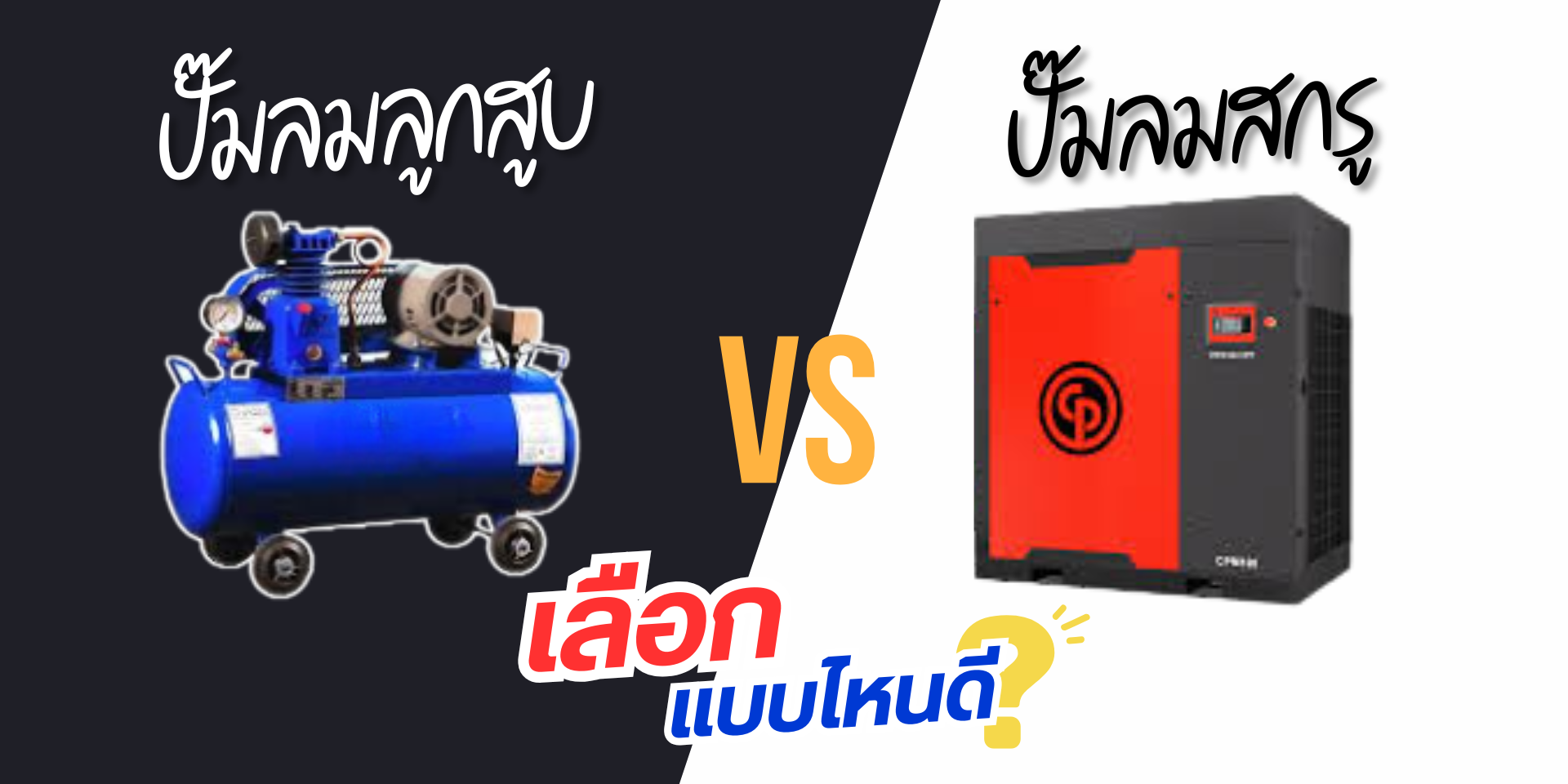
Which Air Compressor Should You Choose? Piston vs. Screw??
In many factories, especially SMEs or startups with limited machinery, the Piston Air Compressor is often the first choice. Its low initial cost and ease of installation seem sufficient for the early stages of production. However, as production lines expand and output increases, hidden problems often begin to surface: air pressure drops during peak hours, the machine fails to keep up with demand, overheating occurs, or parts wear out prematurely. Frequent maintenance shutdowns follow, along with disruptive noise levels.
The critical question is: Is it time for your factory to "step up" to a Screw Air Compressor?
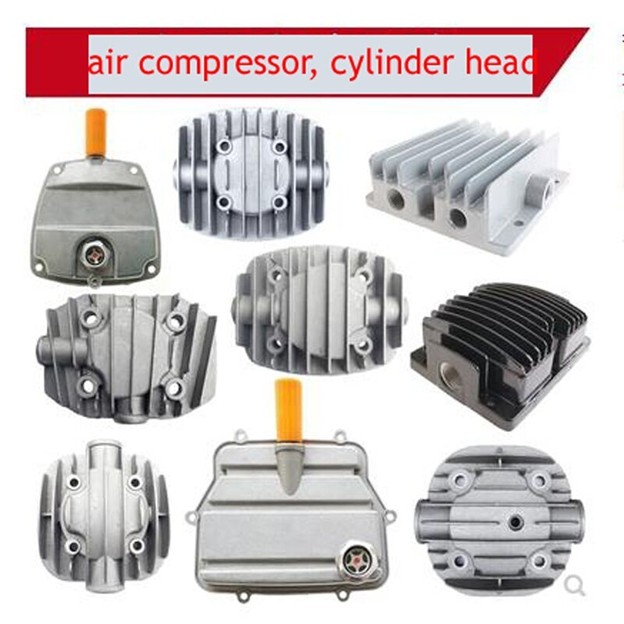
Piston Air Compressor (Reciprocating)
How it works: Uses pistons moving up and down within cylinders to compress air in pulses before sending it to a receiver tank.
Key Advantages:
1. Low initial purchase price.
2. Ideal for Intermittent Use.
3. Simple design; easy for basic maintenance.
Common Real-World Problems:
Pressure Drops: Because it compresses air in "pulses," it cannot provide a truly continuous supply. When multiple machines run simultaneously, air pressure often drops instantly.
Overheating under heavy loads: If a piston pump operates beyond 60–70% of its capacity, heat builds up rapidly, significantly shortening the machine's lifespan.
Mechanical Failure: High numbers of moving parts lead to faster wear and tear on valves, rings, and pistons, resulting in frequent production downtime.
Noise and Vibration: The high noise levels often require a dedicated engine room or negatively impact the staff's working environment.
Warning: If your piston compressor is running near 100% all the time, it is a clear sign that your system is no longer fit for purpose!
Screw Air Compressor (Rotary Screw)
How it works: Uses two interlocking helical rotors to compress air in a Continuous Flow. This is specifically engineered for industrial applications.
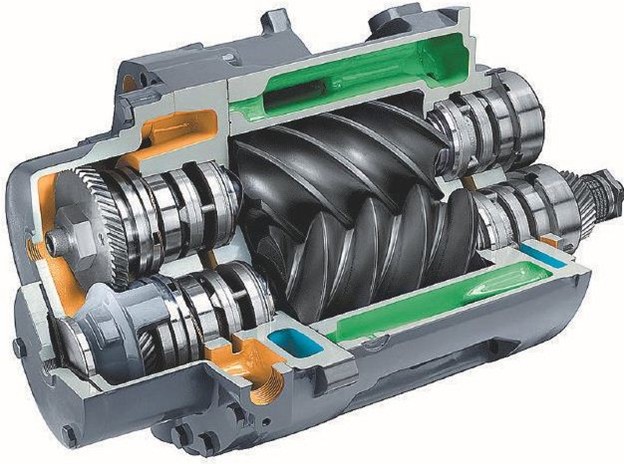
Key Advantages that Transform Factories:
Steady, Continuous Airflow: Perfect for production lines that require constant air without pressure fluctuations.
Heavy-Duty Design: Built to run 24/7 at 80–100% load with high stability.
Significantly Quieter: Low vibration and noise allow for installation closer to the production area.
Advanced Control Systems: (Especially Inverter models) These save energy by adjusting to actual demand, preventing "over-sized" machine waste and controlling electricity costs.
Who Should Consider "Switching" to a Screw Compressor?
You should consider an immediate upgrade if your factory experiences the following:
1. The piston compressor almost never stops running.
2. Air pressure drops whenever multiple machines operate at once.
3. Maintenance is required multiple times per year.
4. Electricity bills are unusually high.
5. You have plans to increase production capacity in the near future.
In reality, Piston Compressors are not designed to be the "heart of a factory." They are better suited for small tasks, supplementary work, or as a backup system.
The Hidden Costs
Many organizations focus only on the "Purchase Price" but overlook hidden costs such as:
- Lost Production Hours due to air pressure drops.
- Labor and Spare Part Costs from frequent maintenance.
- Energy Inefficiency from running a small machine at 100% capacity constantly.
In many cases, switching to a Screw Air Compressor isn't an added expense—it is a strategic move to eliminate hidden costs.