Compressor Efficiency & Energy Savings
Last updated: 4 Jul 2026
503 Views
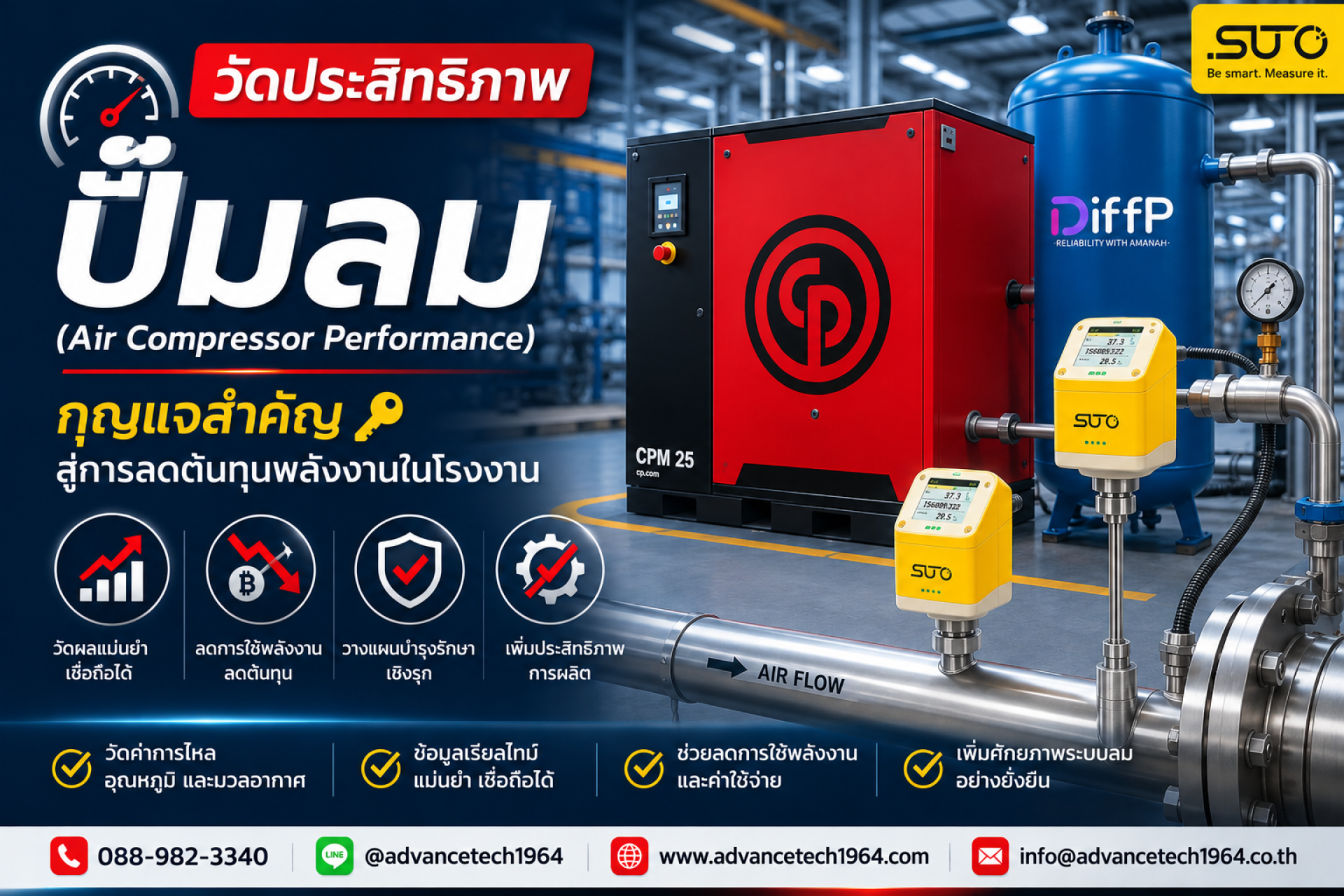
What is Air Compressor Performance Measurement?
Air compressor performance measurement is the process of inspecting and collecting operational data from a compressed air system to analyze the efficiency of both the machinery and the overall system. It does not look at the compressor alone, but encompasses all related equipment, including air dryers, air filters, air receivers, piping systems, and end-use points throughout the factory.
Analyzing this data helps determine whether the system is utilizing energy cost-effectively and allows for the precise identification of root causes behind production-impacting issues.
Why Should Factories Measure Air Compressor Efficiency?
Air compressors are high-energy-consuming equipment, accounting for approximately 10–30% of a factory’s total electricity consumption on average. Even minor inefficiencies in the system can drive up electricity costs by hundreds of thousands of baht per year.
Regular performance measurement helps to:
Reduce electricity costs caused by unnecessary energy consumption.
Detect air leaks within the compressed air system.
Minimize pressure drop issues.
Prevent sudden machinery breakdowns and unscheduled downtime.
Plan Preventive Maintenance (PM) more effectively.
Extend the lifespan of the air compressor and system components.
Key Parameters to Measure for Efficiency Assessment
1. Air Flow Rate
Installing a flow meter helps identify the actual air consumption of each production process, enabling optimal energy management planning.
2. Air Pressure
Air pressure is another critical variable affecting system efficiency. Measurements should be taken at the discharge point, post-air dryer, post-filter, and at the end of the production line.
A pressure drop exceeding 0.3–0.5 bar indicates potential issues, such as clogged filters, undersized piping, or system leaks.
3. Power Consumption
Monitoring actual electrical power using a power meter helps determine whether the compressor's energy consumption aligns with the volume of air it produces.
4. Dew Point
For factories requiring high-quality air, measuring the dew point is vital as it indicates the amount of residual moisture in the compressed air system.
A dew point higher than the standard baseline may stem from air dryer malfunctions, cooling system issues, or a need for equipment maintenance.
5. Operating Temperature
Monitoring lubricant temperature, air discharge temperature, and ambient temperature helps prevent damage to the air end and mitigates the risk of unexpected system shutdowns. Compressed Air Leak Detection Many factories lose compressed air unknowingly through leaks in joints, valves, or piping networks, which can account for 20–30% of the total air produced.
Utilizing an Ultrasonic Leak Detector allows for the rapid location of leaks even while machinery is fully operational, reducing energy waste and lowering the workload on the air compressor.
What is an Air Audit?
An Air Audit is a comprehensive evaluation of the entire compressed air system. It involves continuous data collection via data loggers and various measurement instruments, such as
Benefits of Air Compressor Performance Measurement
Factories that regularly measure and analyze their compressed air system performance gain multiple benefits, including:
Up to 10–30% reduction in electricity costs.
Enhanced production efficiency.
Reduced unexpected downtime.
Extended lifespan for compressors and auxiliary equipment.
Lower maintenance expenditures.
Increased reliability of the compressed air system.
Alignment with industrial energy management standards.
Conclusion
Air compressor performance measurement is not just a routine machinery check—it is a total system evaluation designed to uncover energy losses and highlight optimization opportunities.
Regular measurement, combined with Preventive Maintenance (PM) and Air Audits, empowers factories to cut energy costs, enhance production stability, and maximize their return on equipment investment.
Advance Tech 1964 Co., Ltd.
We provide professional Air Compressor Performance Testing and Air Audit services utilizing industry-standard instruments. Our expert engineering team analyzes your data to help your factory eliminate energy waste, optimize compressed air system efficiency, and achieve long-term production cost reductions.
Our Services
Air Flow Measurement
Compressor Power Consumption Measurement
Pressure and Pressure Drop Measurement
Dew Point Measurement
Compressed Air Leak Detection
Comprehensive Air Audit Reporting with system optimization recommendations
If you would like to evaluate your factory's compressed air system efficiency, contact our expert team today for a consultation and tailored measurement planning.
Air compressor performance measurement is the process of inspecting and collecting operational data from a compressed air system to analyze the efficiency of both the machinery and the overall system. It does not look at the compressor alone, but encompasses all related equipment, including air dryers, air filters, air receivers, piping systems, and end-use points throughout the factory.
Analyzing this data helps determine whether the system is utilizing energy cost-effectively and allows for the precise identification of root causes behind production-impacting issues.
Why Should Factories Measure Air Compressor Efficiency?
Air compressors are high-energy-consuming equipment, accounting for approximately 10–30% of a factory’s total electricity consumption on average. Even minor inefficiencies in the system can drive up electricity costs by hundreds of thousands of baht per year.
Regular performance measurement helps to:
Reduce electricity costs caused by unnecessary energy consumption.
Detect air leaks within the compressed air system.
Minimize pressure drop issues.
Prevent sudden machinery breakdowns and unscheduled downtime.
Plan Preventive Maintenance (PM) more effectively.
Extend the lifespan of the air compressor and system components.
Key Parameters to Measure for Efficiency Assessment
1. Air Flow Rate
Installing a flow meter helps identify the actual air consumption of each production process, enabling optimal energy management planning.
2. Air Pressure
Air pressure is another critical variable affecting system efficiency. Measurements should be taken at the discharge point, post-air dryer, post-filter, and at the end of the production line.
A pressure drop exceeding 0.3–0.5 bar indicates potential issues, such as clogged filters, undersized piping, or system leaks.
3. Power Consumption
Monitoring actual electrical power using a power meter helps determine whether the compressor's energy consumption aligns with the volume of air it produces.
4. Dew Point
For factories requiring high-quality air, measuring the dew point is vital as it indicates the amount of residual moisture in the compressed air system.
A dew point higher than the standard baseline may stem from air dryer malfunctions, cooling system issues, or a need for equipment maintenance.
5. Operating Temperature
Monitoring lubricant temperature, air discharge temperature, and ambient temperature helps prevent damage to the air end and mitigates the risk of unexpected system shutdowns. Compressed Air Leak Detection Many factories lose compressed air unknowingly through leaks in joints, valves, or piping networks, which can account for 20–30% of the total air produced.
Utilizing an Ultrasonic Leak Detector allows for the rapid location of leaks even while machinery is fully operational, reducing energy waste and lowering the workload on the air compressor.
What is an Air Audit?
An Air Audit is a comprehensive evaluation of the entire compressed air system. It involves continuous data collection via data loggers and various measurement instruments, such as
- Flow Meters
- Power Meters
- Pressure Sensors
- Dew Point Meters
- Temperature Sensors
- Ultrasonic Leak Detectors
Benefits of Air Compressor Performance Measurement
Factories that regularly measure and analyze their compressed air system performance gain multiple benefits, including:
Up to 10–30% reduction in electricity costs.
Enhanced production efficiency.
Reduced unexpected downtime.
Extended lifespan for compressors and auxiliary equipment.
Lower maintenance expenditures.
Increased reliability of the compressed air system.
Alignment with industrial energy management standards.
Conclusion
Air compressor performance measurement is not just a routine machinery check—it is a total system evaluation designed to uncover energy losses and highlight optimization opportunities.
Regular measurement, combined with Preventive Maintenance (PM) and Air Audits, empowers factories to cut energy costs, enhance production stability, and maximize their return on equipment investment.
Advance Tech 1964 Co., Ltd.
We provide professional Air Compressor Performance Testing and Air Audit services utilizing industry-standard instruments. Our expert engineering team analyzes your data to help your factory eliminate energy waste, optimize compressed air system efficiency, and achieve long-term production cost reductions.
Our Services
Air Flow Measurement
Compressor Power Consumption Measurement
Pressure and Pressure Drop Measurement
Dew Point Measurement
Compressed Air Leak Detection
Comprehensive Air Audit Reporting with system optimization recommendations
If you would like to evaluate your factory's compressed air system efficiency, contact our expert team today for a consultation and tailored measurement planning.


Related Content